North Idaho Slow Growth
-
Election Fraud in Kootenai—P3: Solutions
Dec 27, 2024
This is the final part of a three part series on Election Fraud in Kootenai County. It suggests practical ways to increase transparency and prevent machine fraud. The two prior articles exposed serious problems with KC's tabulators and pointed out other vulnerabilites of the current system.
Securing Kootenai County Elections
Ever since the disastrous 2020 Presidential election brough attention to the problem of wide-spread election fraud in American, grassroots election integrity activists have been skeptical of electronic voting machines. And many of those who understand the extend of the problem recommend hand-counting because they know that once the physical ballots are handed over to the central office, all meaningful transparency into the election is lost.
However, in large counties hand counting would involve an enormous organizational effort, and would still be open to charges of fraud and uncertaintly. Understandably, election officials do not want to commit to this solution. So nothing changes.
But there is good news. Hand-counting the ballots is not the only way—or even necessarily the best way—to decentralize control of elections, increase transparency, and eliminate the possibility of machine fraud. With only a few changes to the existing system, Kootenai County can greatly reduce the threat of fraud and return trust to our elections.
And best of all, these improvements can be made at very little expense and with almost no extra work for election officials.
-
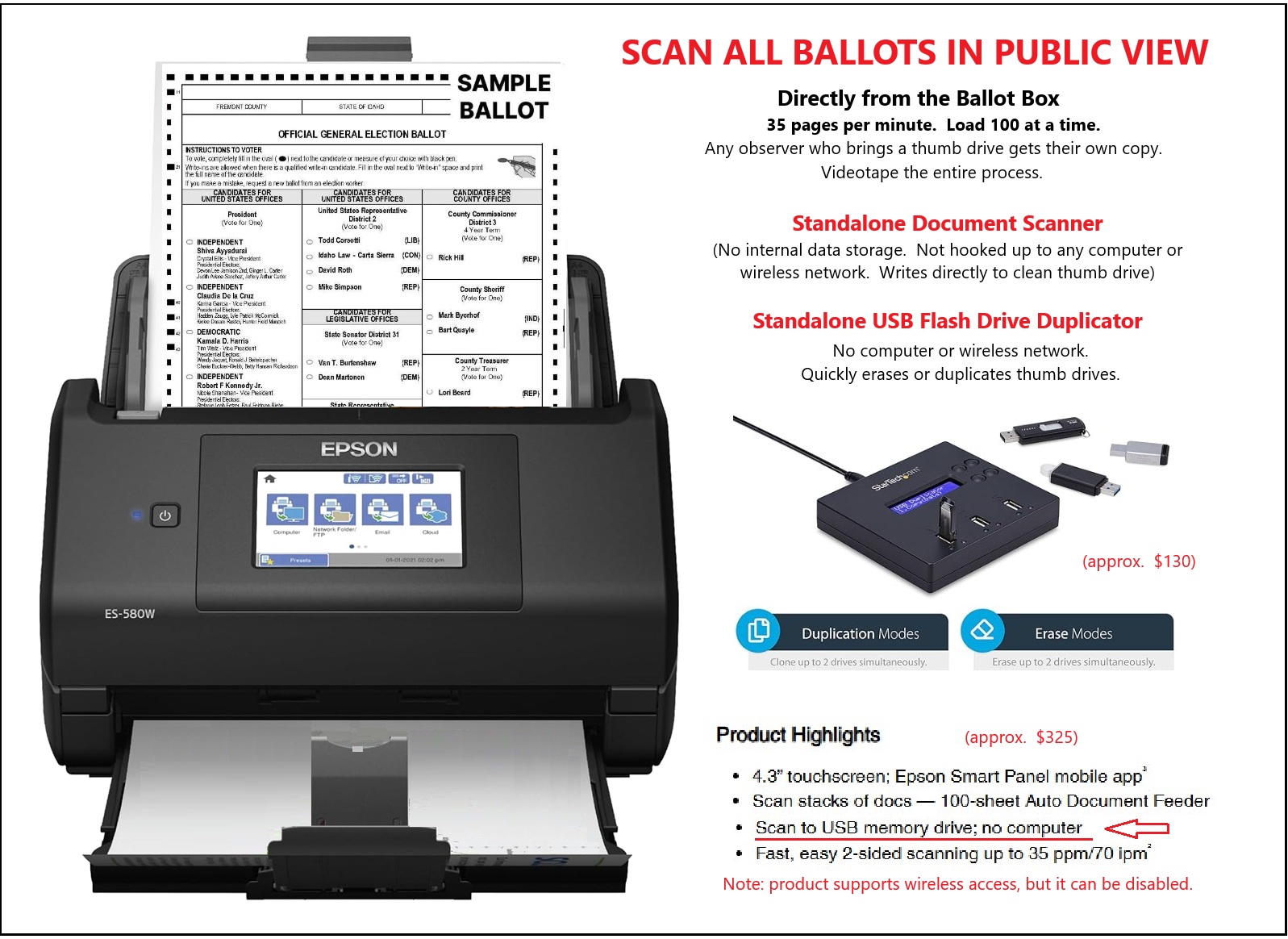
Scan ALL ballots in public view on a commercial document scanner and provide public access to the ballot image files as soon as possible after the polls close.
-
Make administrative changes to Secure the Elections office during Tabulation.
These measures would give citizens access to reliable ballot images and ballot counts before tabulation even begins, make recounts almost unnecessary, and make machine fraud extremely difficult to get away with.
In the long run, of course, Kootenai would be better off with a less centralized tabulation system that does not depend so much on a single Election Technology Company (that we refer to as ETC). But at this time, ETC is one of only two tabulator companies certified by the state of Idaho, and it is the system that everyone in the elections office has been trained to work with.
Therefore, we are assuming that ETC tabulators will continue to be used by the KC Elections office for their official counts, at least for the time being. We are only proposing that citizens have access to the physical ballots for a short time BEFORE they are tabulated.
Scan ALL Ballots in Public View
The most important reform necessary to increase transparency and minimize any possibility of machine fraud is to Scan ALL Ballots in public view with a commercial document scanner, BEFORE they are tabulated at the Elections office. And a system should be in place to upload these "unofficial" images to a website where everyone can access them as soon as possible after the polls close.
Security issues related to document scanners, will be covered in a following section. But first we'll give an overview of what would be involved, and a survey of the benefits. The following summary describes how scanning election-day voting at the precincts would proceed, but similar procedures for scanning early and absentee ballots could also be estabished at the elections office.
Scanning Election-Day Ballots at Precincts
Immediately after each polling station closes, all ballots in the secured ballot box will be removed in the presence of observers, and scanned on a “standalone” commercial document scanner. This document scanner should not be hooked up to any computer or wireless network and should write directly to a blank USB "Master" Thumb drive.
Ballots can be scanned in batches of approximately 45-55, and the precinct captain may begin by scanning a cover page that identifies the precinct, and is signed by the precinct captain and other witnesses. The cover sheet could include other relevant information, such as the number of people who signed the poll book, and the time scanning started. Each subsequent batch will then be written to a time-stamped PDF file.
Commercial document scanners, can scan about 30-35 pages per minute, and can handle approximately 50 ballot sheets per batch. This means it should take no longer than five minutes to scan 100 ballots and less than an hour to scan up to 1000. **
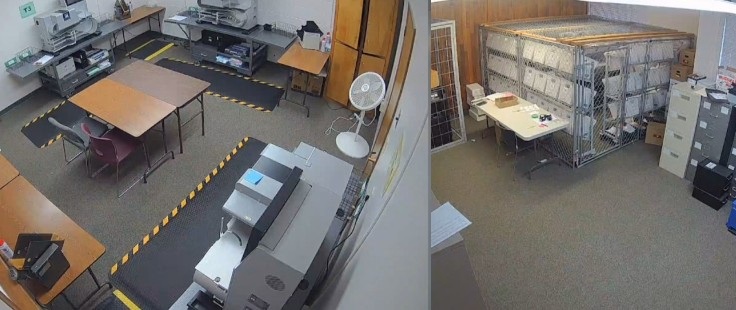
** Note: In Early January, volunteers working at the Kootenai Elections office scanned over 1500 double sided E-Day ballot sheets in 65 minutes, and over 600 (folded) absentee ballot sheets in slightly over half an hour. A typical number of E-Day ballot sheets per precinct is 600 to 1200.
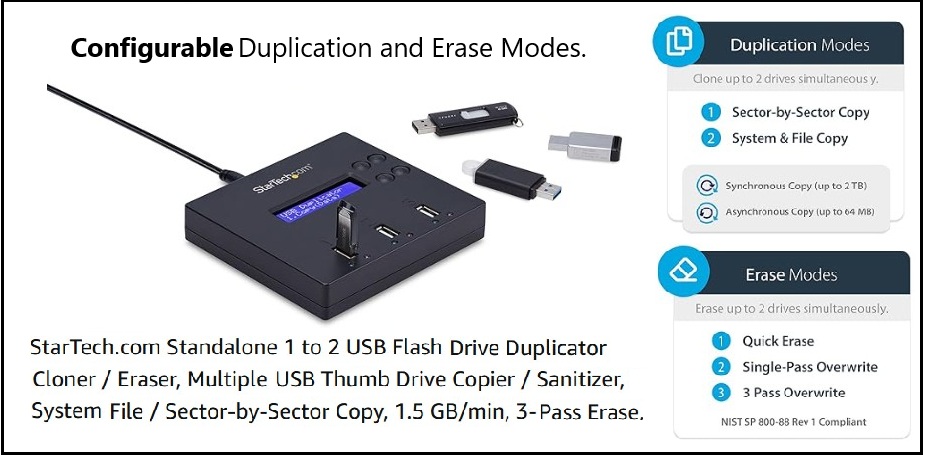
Once all ballots are scanned they can be returned to the secured ballot box, and transported to the elections office, just as they normally are. At the same time, a stand-alone flash drive duplicator could be used to make as many secure copies of the “master” USB flash drive as necessary. Obviously the Elections Department should have an official copy, but so could the representatives of any candidate, political party, organization, or any individual citizen who was present to witness the scanning of the ballots.
Once duplicates have been made, the Precinct Captain could be responsible for uploading the scanned data from an “officially” sanctioned thumb drive to a predetermined website, and the “timestamps” on the files from the master copy would be proof against tampering. In this manner, all ballot images from the entire county could be uploaded to a publicly accessible website before official tabulation results are posted.
From the point of view of the Elections Office, centralized tabulation could proceed exactly as it always has. The main difference would be about an hour delay in receiving precinct ballots, and the fact that anyone who did not like the results reported by the elections office would have immediate access to independently scanned ballots to check for themselves.
Advantages of Publicly Scanned Ballots
There is no downside to scanning ballots in public view immediately after polls close (or immediately after they are opened, in the case of absentee ballots). And there are many advantages, other than the obvious increase in trust and transparency.
-
Makes machines fraud very easy to detect—Machine fraud cannot occur undetected unless there are significant obstacles to independently verifying the accuracy of machine ballot images and vote counts. Idaho’s current recount and canvassing statutes make verifying tabulator scans against the physical ballots very difficult or impossible.
-
Make recounts easy—Any candidate who believes he has been cheated out of office will have the evidence he needs to do his own hand count.
-
Compatible with Hand-counting—Publicly scanning ballots can be done instead of hand-counting, but it could also be done along with hand-counting, since it would increase transparency, and would allow hand-counts to be independently verified.
-
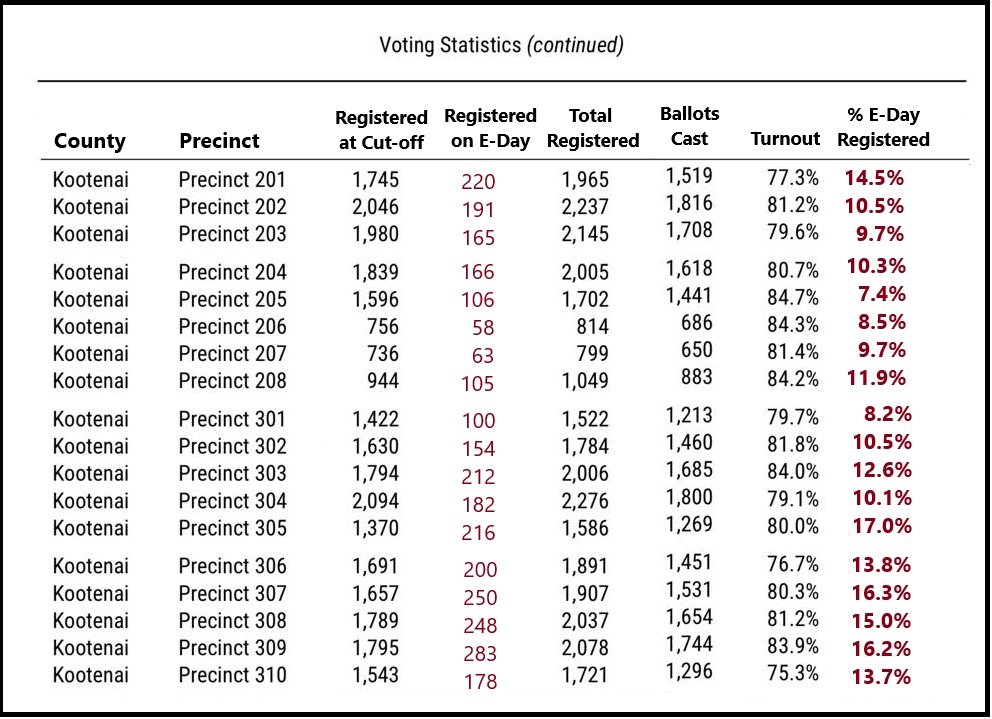
Provides reliable ballot counts—An accurate count of the number of ballots cast in each precinct is a guard against possible inaccuracies in poll books. This is helpful because a large number of voters typically register on election day and knowing exactly how many ballots were cast prevents any possible tampering with precinct totals anywhere in the process.
-
Opens the door to precinct-based tabulation—Ideally, within a few years, tabulation software that accepts ballot images as an input be certified so that counties, such as Kootenai could have a faster, more decentralized way of running elections.
-
Highlights importance of adjudication—Providing voters with access to scannned ballot images may highlight occasional irregularities in the process, such as overvotes, minor inconsistencies in poll books, and other issues that require adjudication. But providing this transparency will help make citizens aware of the complexities of vote counting, and increases trust in the process.
Security Concerns Regarding Publicly Scanned Ballots
The reason that ballots should be scanned on commercial document scanners rather than tabulators, is that off-the-shelf document scanners have no ability to alter ballot images in any way unless they are hooked up to a computer. Some scanners have OCR or photo editing software associated with them, but these programs post-process images and run on the host-computer, not the scanner itself.
This is important, because even if bad actors wanted to take over a document scanner with intent to sabotage, they could not make it do something that it is not capable of doing. And document scanners that are not hooked up to a computer cannot alter or duplicate ballot images.
Therefore any scanner used to process ballots must be able to operate in standalone mode, be disconnected from any wireless network or computer, and write directly to a clean "master" USB flash drive.
The problem of securing the USB drive onto which the ballot images are written is trickier, and must involve security protocols, whereby the master USB drive is always in view—preferably videotaped—and duplicates are made, in plain view, as quickly as possible.
For this purpose we recommend a standalone USB duplicator, such as the StarTech 1 to 2 eraser/duplicator. This device can clear USBs as well as duplicate them, so could be used both to prepare flash drives, and to create duplicates from the master drive. And all this can be done almost instantaneously so there is no reason why any observer who desires his own copy should not be able to have an “official” copy made.
The total cost of an "off-the-shelf" standalone document scanner (approx $325) , a standalone USB duplicator (approx $135), and a simple digital camera ($60) should be slightly more than $500 per polling station.
And once reliable ballot images, scanned from physical ballots in public view, are actually in the hands of the public, it’s game over for machine fraud. At that point, any attempt to modify or duplicate ballot images, flip votes, or add in phantom ballots would certainly be discovered.
Secure Tabulation Area during Election Period
As long as ETC tabulators are the officially certified machines on which Kootenai election results must be run, it is important to point out ways to tighten up security in the KC Elections Office in the days surrounding elections.
The great obstacle to this, however, is that for many years there has been a trusting working relationship between the KC Election Officials and ETC Contractors, to the point where ETC contractors and consultants have much more control over KC elections than they should. This situations has been discussed at length in Parts 1 (Who Controls KC’s Elections) and 2 (Vulnerabilities).
But trusting relationships make Kootenai County vulnerable. So we believe more rigorous security measures should be in place to prevent those with specialized knowledge of ETC systems from accessing KC Tabulators.
Most of the following recommendations are suggestions for securing the KC elections office during the 72 hour period surrounding elections (Monday, Tuesday, Wednesday). In theory, this is already done, but in practice,—likely do to overly trusting relationships,—security, and accountability has been somewhat compromised.
-
No ECT Employees or contractors should be anywhere in the elections office during the three-day election period, except in an emergency.
-
KC Tabulators should be operated only by county employees, who are familiar with the ETC system and have been trained to resolve problems.
-
Kootenai IT professionals should be present with ETC contractor when they are on site, and keep detailed records of all software or firmware updates to the system.
-
All non elections office visitors who enter the tabulation area from Monday to Wednesday should sign-in, sign-out, and state their business. (available by PRR.)
-
KC Officials should request that ETC Tabulator Log files for all elections should be available for Public Records Requests, since ETC permission is needed to release this information.
-
Log files of all thumb drives that access tabulators or any ETC equipment or computers, should also be kept, and should be available for PRR.
-
Cast Vote Records for every election should be maintained in such a way that they are available in spreadsheet format for PRR.
In short, KC Elections officials should reduce their dependency on ETC contractors, and all the records needed for an investigator to verify any aspect of the election process need to be easily accessible by way of PRRs immediately after the election. Of all these records, tabulator logs, vote cast records, and accurate poll book records, may be the most important.
Take measures to prevent Counterfeit Ballots
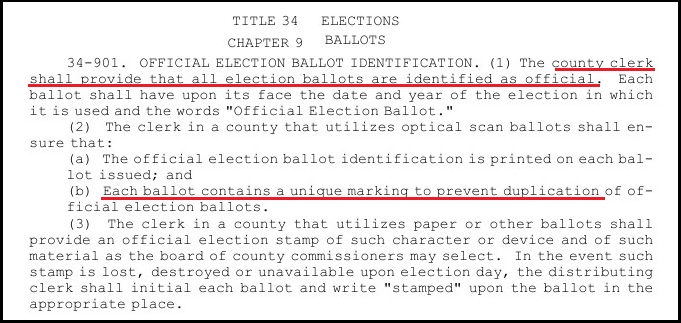
Taking measures to make it difficult to create counterfeit ballots will increase election security, not only in regards to machine fraud, but also other forms of fraud, such as absentee ballot fraud and same-day voting fraud. What is needed, and is required by Idaho law, is a unique mark on each legitimate ballot that indicates that it was produced and distributed by an authorized source. According to Idaho Code 34-901
At the current time official KC ballots are watermarked, but the ETC tabulator does not distinguish between watermarked and non-watermarked ballots, and it is not clear that the watermark cannot be reproduced in an undetectable way.
In Canyon county the clerk has redesigned each ballot to include a unique serial number, and made certain that the tabulator can recognized unauthorized ballots, but unfortunately, this solution is not compatible with the KC's current tabulator technology.
The problem can be solved for in-person voting (both early, and election-day) by having the a poll work affix a barcode, stamp, or some other identifying mark to the ballot before it is distributed, and to absentee ballots before they are scanned. This would not entirely address the problem of counterfeit absentee ballots making it to the elections office, but it would certainly help prevent any swapping out of officially recognized ballots either before or after tabulation.
ETC provides a way of marking ballots with unique identifiers as it tabulates them, but that is useless for preventing counterfeit ballots from being tabulated.
This is a difficult problem as long as ETC is Kootenai’s vendor, because their machines do not currently have a good way of identifying, screening out, or flagging potentially counterfeit ballots, but the combination of independently scanning ballots, and marking each in-person ballot at the time it is distributed with a unique, identifiable mark, would do a great deal to prevent any possibility of counterfeiting.
Preventing other forms of Election Fraud
The focus of this series has been on machine tabulator fraud, which is the most serious and difficult to detect form of election fraud. But it is not the only type of election fraud, or even the only type of electronic fraud.
It is disturbing that even if we succeed in eliminating machine fraud altogether, there will still be other ways for bad actors to influence our elections. The solutions proposed in this article do not address absentee ballot fraud or voter registration fraud, but they do make manipulation of polling records much more difficult. So it is not unlikely that if it is impossible to cheat by way of tabulators, those who have most to gain by rigging elections will increasely rely on absentee fraud.
That said, putting an end to machine fraud in Kootenai county is a worthy goal, and problems with absentee fraud can be addressed by more rigorous safeguards on voter registration and absentee ballots. These too deserve consideration, but some solutions may need to be addresssed at the state level, so we will have to leave them for another day.
-
-
Comments
- (no comments)